How to repair cracks in render is one of the most common questions strata committees and building managers ask once hairline lines start appearing on exterior walls. And it’s a fair concern. Cracked render doesn’t just affect how a building looks — it can signal deeper issues, lead to water ingress, and quietly drive up long‑term repair costs.
If you’re responsible for a strata building, you’re probably already thinking: Is this cosmetic or structural? Can we fix it now without blowing the budget? Will this turn into a bigger problem later? You’re not alone — and you’re right to be cautious.
This guide explains how to fix cracked render walls, what causes render cracking, when DIY render crack repair might be acceptable, and when professional render repair services are the smarter, safer option — especially for high‑rise and difficult‑access buildings.
Why cracked render should never be ignored
A cracked render wall outside might look minor today, but exterior render crack repair is all about timing. Small cracks allow moisture to penetrate the wall system. Over time, that moisture can reach substrates, reinforcement, or concrete elements — accelerating deterioration and increasing repair scope.
For strata committees, this is where anxiety creeps in. Nobody wants unexpected special levies, resident complaints, or emergency works. The goal is simple: identify the cause early and apply the correct render crack repair method so the issue is resolved once — not revisited every few years.
Common render cracks causes and solutions
Before talking about repair, it’s critical to understand why the render is cracking. Treating symptoms without addressing the cause is how short‑term fixes turn into recurring costs.
1. Hairline cracks from shrinkage or curing
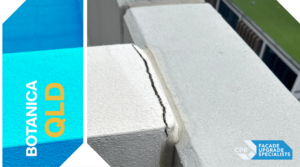
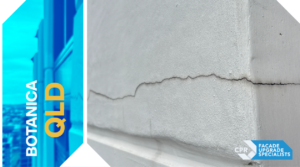
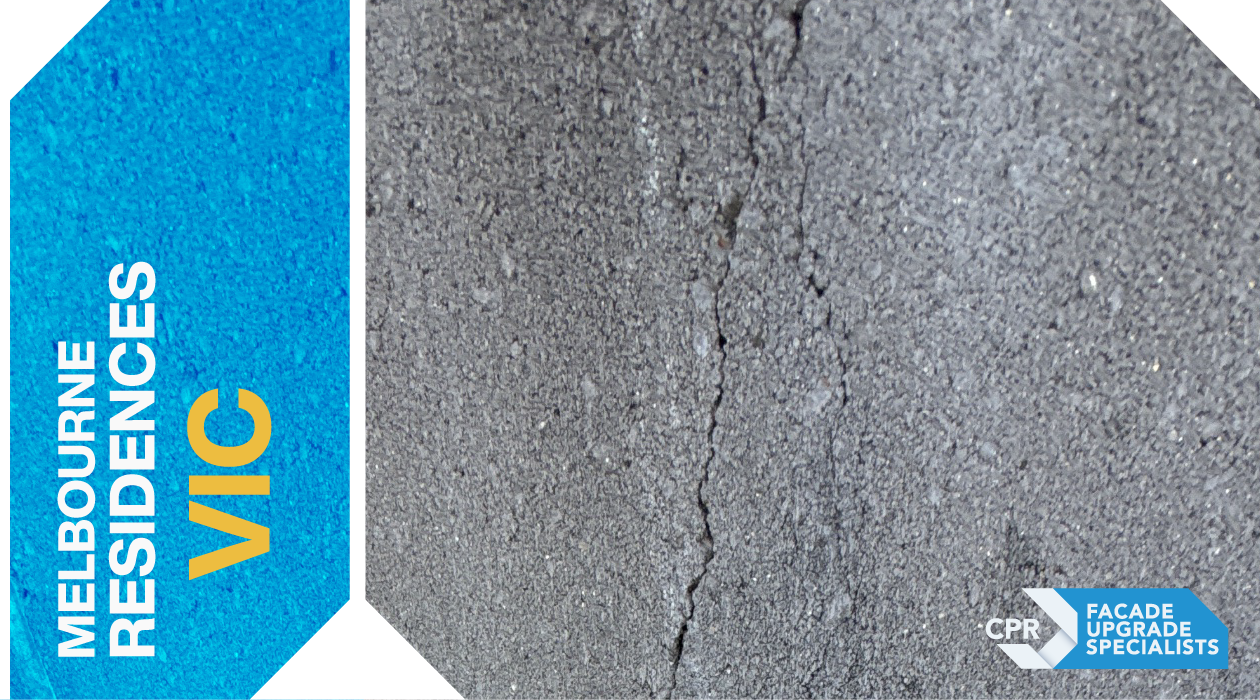
Hairline cracks in render repair are common, especially in cement render. They usually form as the render cures and shrinks. While often cosmetic, they can still allow water ingress if left untreated.
Solution: Flexible render crack filler systems combined with breathable coatings.
2. Structural movement
Buildings move. Thermal expansion, settlement, and slab deflection can all lead to wall render cracking repair needs. These cracks are usually wider and may reopen after patching.
Solution: Flexible repair systems that accommodate movement — not rigid fillers.
3. Poor original application
Incorrect mix ratios, insufficient curing, or lack of control joints can cause premature cracking.
Solution: Removal of failed sections and proper cement render crack repair using compliant materials.
4. Water ingress and corrosion
In high‑rise buildings, persistent moisture can cause corrosion behind the render, pushing it outward and cracking the surface.
Solution: Integrated facade remediation — not surface patching alone.
How to repair cracks in render: step‑by‑step overview
The right repair method depends on crack type, location, and building height. Here’s how professionals approach exterior render crack repair.
Step 1: Assess the crack (not just visually)
Crack width, depth, pattern, and location all matter. Repeating cracks or vertical lines near slab edges often indicate movement.
For strata buildings, this assessment should be documented and traceable — which means for you fewer disputes, clearer budgets, and confidence when presenting to owners.
Step 2: Prepare the surface properly
Loose render is removed, cracks are cleaned, and edges are prepared to ensure proper adhesion. Skipping this step is the fastest way to guarantee failure.
Step 3: Apply the correct render crack repair method
- Hairline cracks: Flexible fillers or elastomeric systems
- Moderate cracks: Reinforced patch repair with mesh
- Severe cracking: Removal and re‑rendering of affected zones
Step 4: Finish with protective coatings
Breathable, flexible coatings reduce future cracking and protect against moisture — extending the repair lifespan.
DIY render crack repair: when it works (and when it doesn’t)
DIY render crack repair is often tempting, especially for small cracks visible from ground level. For single‑storey, non‑structural walls, it can be acceptable.
However, for strata and commercial buildings, DIY solutions usually fall short because:
- Cracks are often symptoms, not root causes
- Access limitations prevent full inspection
- Incorrect materials can trap moisture
What looks like a cost saving today can multiply future render repair cost — which means for you higher levies and more disruption later.
Render repair cost: what actually drives the price
Render repair cost isn’t driven by crack size alone. Key factors include:
- Building height and access difficulty
- Extent of underlying damage
- Need for traffic, safety, or resident protection
- Repair methodology and durability
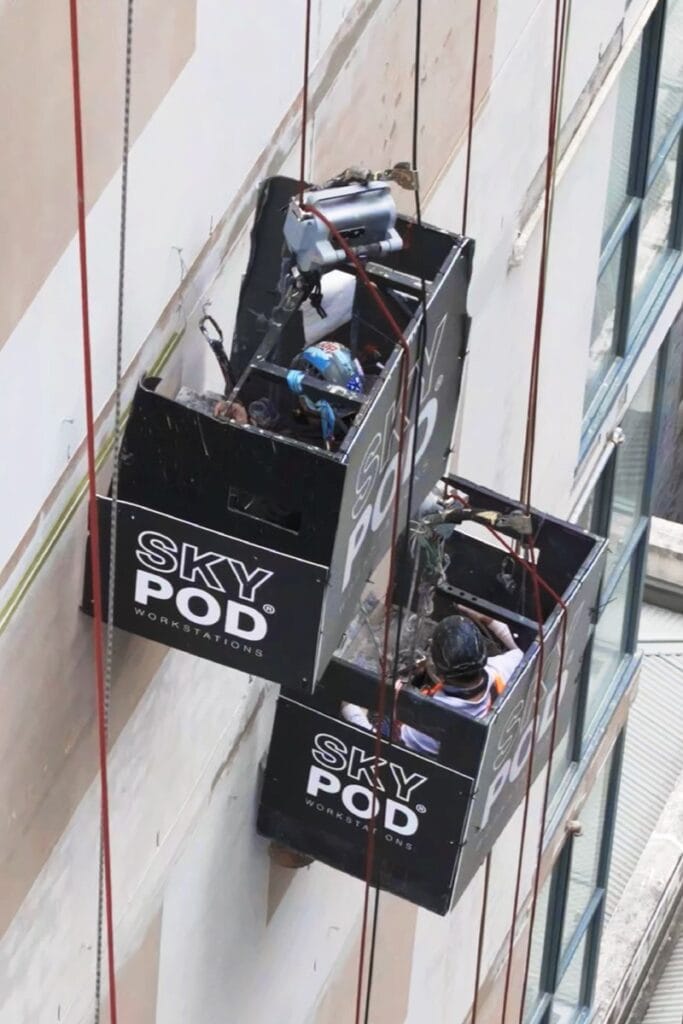
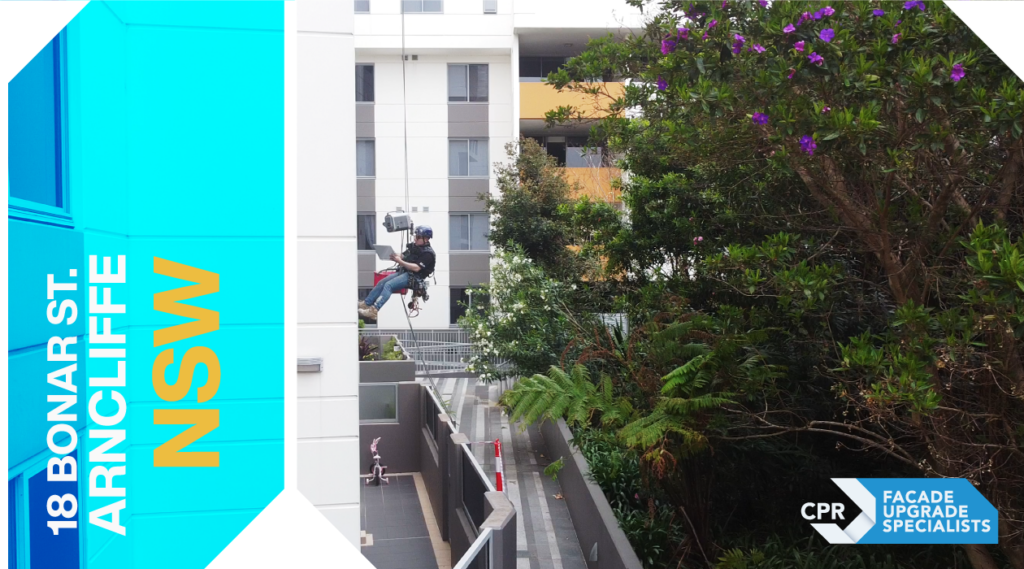
Traditional scaffolding can account for up to 30% of project cost. That’s why CPR’s Scaffold‑Free™ access using MARS™, PEARS®, and SkyPod® changes the equation.
These systems allow repairs to be completed externally, quietly, and efficiently — which means for you reduced access costs, faster timelines, and minimal disruption to residents.
Why professional render repair services outperform patch jobs
Professional render repair services aren’t about making cracks disappear — they’re about preventing repeat failures.
CPR delivers facade remediation using AIMMS™ (Advanced Integrated Maintenance & Management System) — a single, transparent system that:
- Diagnoses the real cause of cracking
- Documents every repair with before‑and‑after records
- Ensures quality consistency across the entire facade
Which means for you: fixed scopes, fewer surprises, and repairs designed to last decades — not just a few seasons.
High‑rise and difficult‑access buildings: a different standard is required
A cracked render wall outside on a high‑rise building isn’t a DIY problem. Access, safety, and compliance are non‑negotiable.
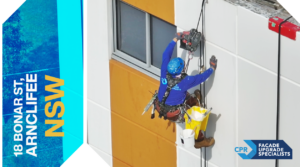
CPR’s Accredited Service Partners™ operate using patented Scaffold‑Free™ systems, eliminating the need for intrusive scaffolding while maintaining full safety compliance.
This approach delivers:
- Up to 30% cost savings on access
- Reduced project duration
- Minimal noise and privacy impact
- Safer worksites for residents and pedestrians
How to stop render cracks from coming back
Knowing how to stop render cracks is just as important as repairing them.
Long‑term prevention includes:
- Proper movement joints
- Breathable coatings
- Ongoing facade inspections
- Planned maintenance instead of reactive repairs
CPR’s AssetCare™ programs support long‑term facade durability — which means for you predictable budgeting and fewer emergency repairs.
When to act (and why waiting costs more)
If you’re already seeing multiple cracks, peeling paint, or water staining, delaying action almost always increases render repair cost.
Early intervention allows targeted repairs rather than full facade replacement — protecting both the building and the owners’ finances.
You can explore how professional concrete and render repairs are delivered as part of a long‑term durability strategy through CPR’s concrete repair and durability solutions, designed specifically for high‑rise and difficult‑access facades, or speak directly with a specialist to understand the most appropriate repair path for your building.
For tailored advice, you can also request a facade remediation consultation or book an AIMMS™ demonstration, giving your committee or management team complete visibility before decisions are made.
Final thoughts
Understanding how to repair cracks in render isn’t just about fixing walls — it’s about protecting asset value, avoiding unnecessary levies, and delivering peace of mind.
Whether you’re dealing with hairline cracks in render repair or widespread wall render cracking repair, the smartest outcome comes from diagnosing properly, choosing the right repair method, and working with specialists who understand complex facades.
That’s how cracks get fixed — and stay fixed.