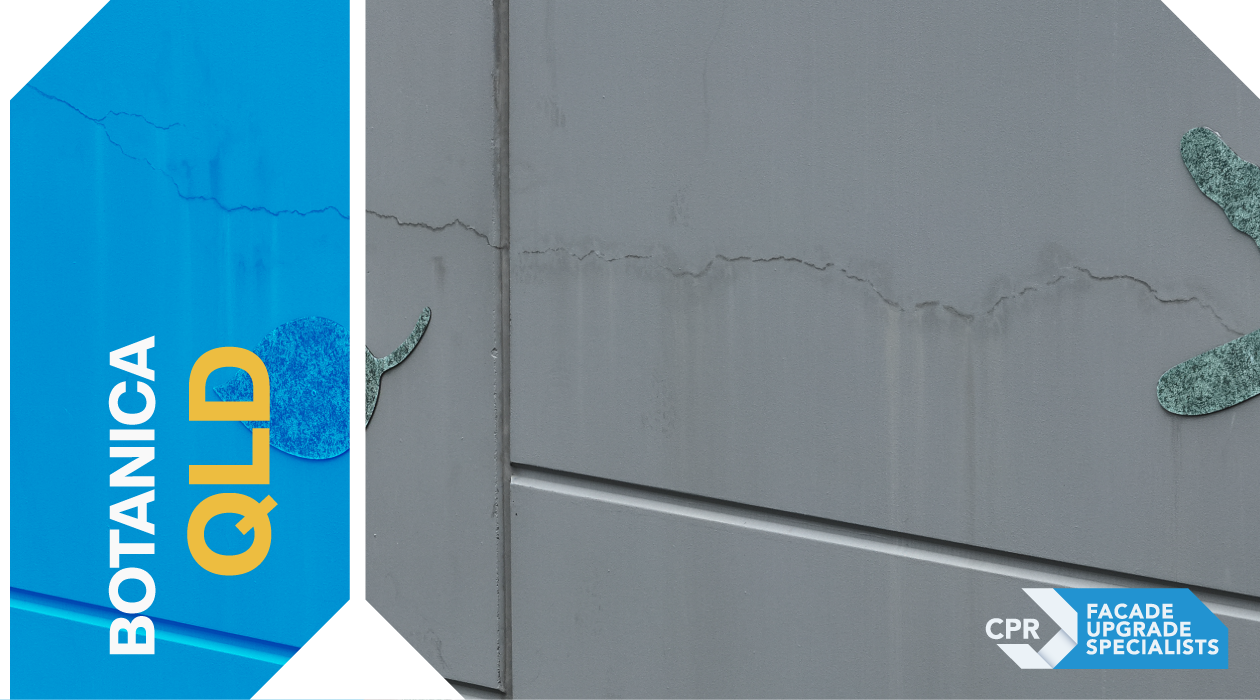
How to repair hairline cracks in rendered walls is one of the most common questions we hear from strata committees, building managers, and consultants—especially when small cracks start appearing and nobody is quite sure whether they’re cosmetic or the beginning of something bigger.
If you’re here, chances are you’ve already noticed fine lines running through the render. They might look harmless now, but they often trigger very real concerns: Will this get worse? Are we facing a major repair? Is this going to blow out the budget?
You’re not overthinking it. Hairline cracks in rendered walls are easy to ignore—but they’re also one of the earliest warning signs that a facade needs attention. The good news? When handled properly and early, they can usually be repaired efficiently, affordably, and with minimal disruption.
This guide explains how to fix hairline cracks in render, when DIY solutions make sense, when professional intervention is essential, and how CPR delivers long-term, multi-decade outcomes using Scaffold-Free™ systems and AIMMS™—which means fewer surprises and complete transparency. For buildings where cracking is recurring or widespread, long-term outcomes depend on proper concrete repairs and facade durability solutions rather than cosmetic patching alone.
What are hairline cracks in rendered walls?
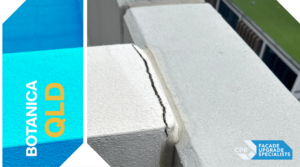
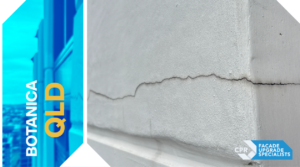
Hairline cracks in rendered walls are very fine surface cracks—often less than 1mm wide—that appear in cement render, acrylic render, or other facade coatings. You’ll usually spot them:
- Around window and door openings
- Along slab edges or floor lines
- On sun-exposed elevations
- At junctions between different materials
While they’re often described as “cosmetic,” hairline cracks in exterior render can allow moisture to enter over time, especially in Australia’s harsh climate. Left untreated, small cracks in render walls can escalate into water ingress, render delamination, and even concrete deterioration.
Why hairline cracks appear in render
Understanding why hairline cracks appear in render helps determine the right repair method—and avoids repeating the same problem later.
Common causes include:
- Thermal movement: Buildings expand and contract daily due to temperature changes. Render doesn’t always move at the same rate as the substrate beneath it.
- Shrinkage during curing: Cement render naturally shrinks as it dries. If not applied or cured correctly, hairline cracks can form early.
- Building movement: Even stable structures experience minor settlement over time.
- Inadequate control joints: Without proper movement joints, stress releases itself through cracking.
- Age and weather exposure: UV radiation, rain, wind, and pollution gradually weaken render surfaces.
Hairline cracks in cement render are rarely caused by a single issue—it’s usually a combination of age, movement, and exposure.
Are hairline cracks something to worry about?
This is where many strata committees feel stuck. On one hand, the cracks look minor. On the other, nobody wants to be responsible for ignoring a facade issue.
Here’s the simple truth:
- Early-stage hairline cracks are manageable
- Ignored cracks almost always become expensive
Water doesn’t need a large opening. Over time, moisture seeps through tiny cracks, compromising adhesion and accelerating deterioration behind the render.
Knowing when to repair hairline cracks in render is critical. Early repairs are preventative. Delayed repairs are reactive—and far more costly.
DIY hairline crack repair render: when it works (and when it doesn’t)
DIY hairline crack repair render solutions are often searched for—and in some cases, they’re appropriate.
DIY may be suitable if:
- Cracks are internal or sheltered
- Cracks are extremely fine and not recurring
- The wall is easily accessible
- There’s no evidence of moisture or movement
A basic DIY approach usually involves cleaning the crack, applying a render crack filler for hairline cracks, smoothing, and repainting.
DIY is not suitable when:
- Cracks reappear after repair
- Cracks run in consistent patterns across floors
- Cracks are on high-rise or difficult-access facades
- There are signs of moisture, staining, or render drummy areas
For multi-storey or strata buildings, DIY solutions often mask symptoms rather than address causes.
Best filler for hairline cracks in render
Choosing the best filler for hairline cracks in render depends on flexibility, compatibility, and longevity.
Common options include:
- Elastomeric acrylic fillers – flexible and suitable for minor movement
- Polymer-modified repair compounds – stronger adhesion and durability
- Crack-bridging coatings – ideal for widespread micro-cracking
The key mistake? Using rigid fillers on a moving facade. That almost guarantees cracks will return.
Professional render hairline crack repair always prioritises flexible, compatible materials that move with the building.
The correct rendered wall crack repair method
A proper rendered wall crack repair method follows a structured process—not a quick patch.
Step 1: Diagnose the cause
Before any repair, CPR assesses whether cracks are cosmetic, movement-related, or moisture-driven.
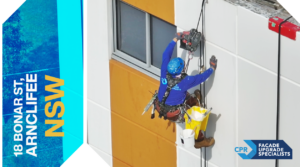
Using Scaffold-Free™ access and detailed visual mapping, we inspect cracks close-up—which means for you accurate diagnosis without scaffolding costs or resident disruption.
Step 2: Prepare the substrate
Cracks are cleaned, opened where required, and stabilised. Any loose or drummy render is addressed—not covered.
Step 3: Apply flexible repair systems
We select repair materials based on exposure, movement, and facade type. This ensures durability, not just appearance.
Step 4: Protective coatings
Breathable, crack-bridging coatings are applied where needed to help prevent hairline cracks in render from returning.
Step 5: Verification through AIMMS™
All repairs are logged, photographed, and recorded in AIMMS™—which means for you full transparency, permanent records, and zero guesswork.
Hairline cracks in exterior render on strata and high-rise buildings
Hairline cracks in exterior render are particularly common on strata and high-rise buildings due to:
- Increased thermal exposure
- Structural movement across multiple levels
- Wind load and weathering
Traditional scaffolding makes early intervention expensive, which often leads to delays.
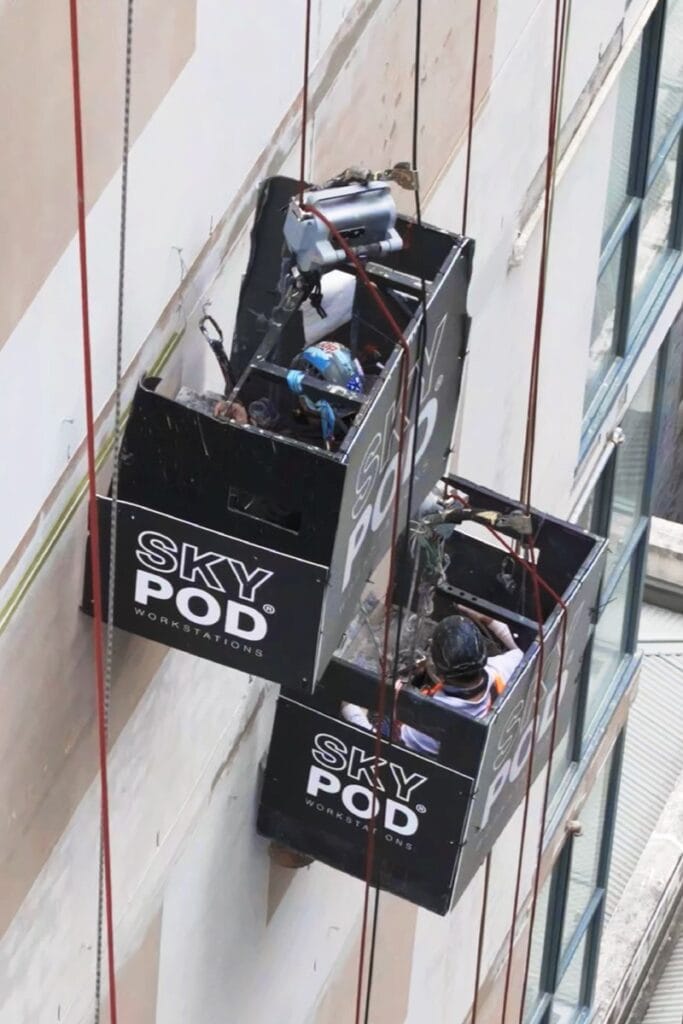
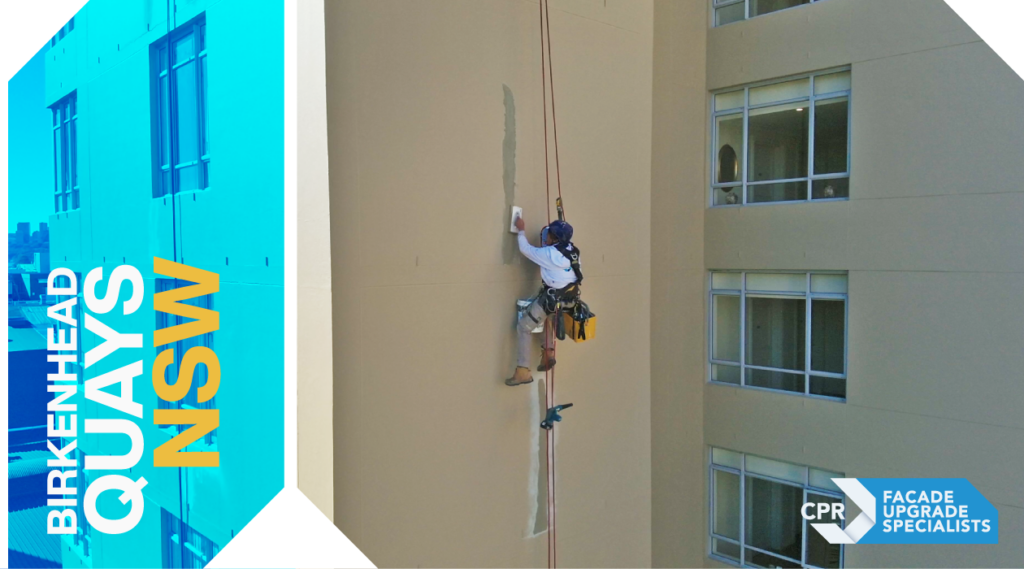
CPR’s Scaffold-Free™ systems—MARS™, PEARS®, and SkyPod®—allow us to access facades efficiently, quietly, and safely.
That translates into cost savings of up to 30%, faster project timelines, and minimal disruption for residents and businesses.
Prevent hairline cracks in render: long-term strategies
Repairing cracks is only half the story. The real value lies in preventing them.
Proven prevention strategies include:
- Correct material selection for exposure zones
- Adequate movement joints
- Flexible coatings instead of rigid paints
- Regular facade inspections
- Early intervention programs
Through CPR’s AssetCare™, buildings move from reactive repairs to planned preservation—which means for you predictable budgets and multi-decade facade performance.
Why CPR takes a different approach
Many contractors simply patch cracks and move on. CPR doesn’t.
Our process combines:
- Scaffold-Free™ access systems
- Accredited Service Partners™ trades
- AIMMS™ for inspection, reporting, and verification
- Documented before-and-after records
This approach eliminates uncertainty and builds trust—especially important for strata committees managing shared funds.
If your building is showing early signs of cracking, the smartest next step is a professional assessment—not guesswork.
You can explore our proven concrete repair and durability solutions through a tailored consultation, including CPR’s specialist approach to concrete repairs and long-term facade durability designed for strata and high-rise buildings.
For buildings ready to act, the next step is to book a facade remediation consultation or request an AIMMS™ demonstration to see exactly how your facade condition is assessed, repaired, and preserved over time. You can also contact CPR’s remediation team to discuss timing, scope, and options that suit your budget while minimising disruption.