How much does render repair cost? It’s one of the first questions strata committees and building managers ask when cracks, flaking or blown render start appearing on a facade. And it’s a fair question. Because behind that simple sentence is a much bigger concern: Are we about to face a financial blowout?
If you’re responsible for a mid- or high-rise building in Australia, the cost of render repair is not just about patching a wall. It’s about protecting asset value, avoiding special levies, and making sure today’s fix doesn’t become tomorrow’s bigger problem.
At CPR Facade Upgrade Specialists, we approach render repair as part of a broader facade remediation strategy — combining Scaffold-Free™ access technology with our proprietary AIMMS™ data-driven system. Which means for you… certainty, transparency, and significant cost savings through smarter methodology, not shortcuts.
What Is the Average Render Repair Cost Per m2?
When clients ask about render repair cost per m2, the honest answer is: it depends on scope, height, access, and condition.
In Australia, small-scale patch repairs may start from approximately $120–$250 per m². Larger remediation projects on multi-storey buildings can range higher, particularly when structural repairs, waterproofing, or coating systems are involved.
But here’s what most online guides don’t tell you:
The real variable is not the render itself. It’s access.
Traditional scaffolding can account for up to 30% of overall project cost. On high-rise or difficult-access buildings, that percentage can climb even higher.
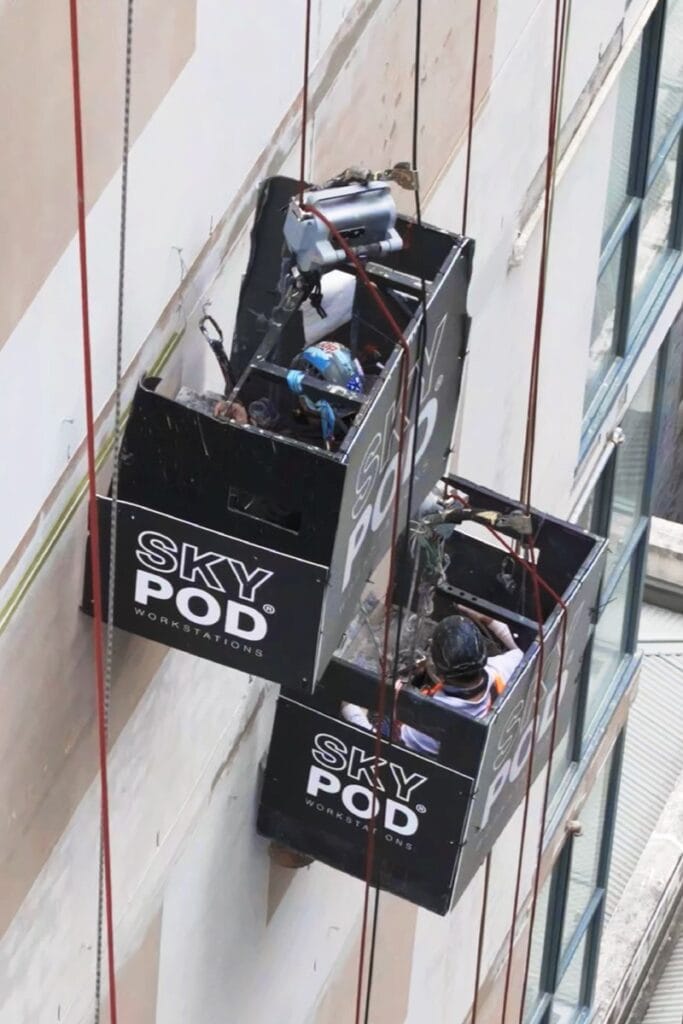
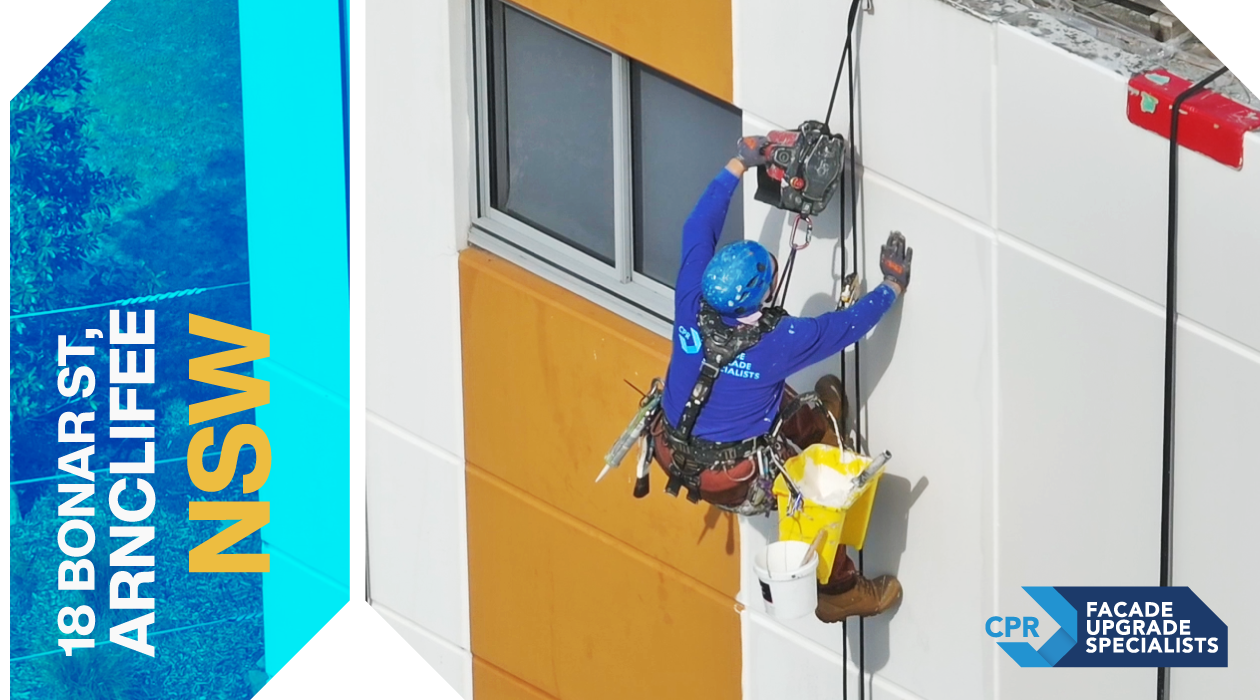
Our Scaffold-Free™ systems — including MARS™, PEARS®, and SkyPod® — eliminate the need for full facade scaffolding in many cases. Which means for you… reduced preliminaries, shorter timelines, and measurable cost savings without compromising safety or quality.
Cost to Re-Render a House vs Multi-Storey Buildings
If you’re researching the cost to re-render a house, you’ll likely see figures between $8,000–$25,000 for low-rise residential properties.
However, strata buildings are different.
High-rise and complex facades involve:
- Rope access logistics
- Structural assessments
- Engineering compliance
- Resident management considerations
- Detailed defect mapping
For strata committees, the question is rarely just “what does it cost to re-render?” It becomes:
Is it worth repairing old render, or should we consider a full re-render?
This is where AIMMS™ changes the conversation.
Through a detailed facade inspection and digital mapping process, we quantify every defect — crack, hollow patch, delaminated section. Which means for you… an accurate, evidence-based scope of works rather than guesswork or inflated allowances.
Render Crack Repair Cost: Small Issue or Bigger Warning Sign?
Render crack repair cost can be modest if addressed early.
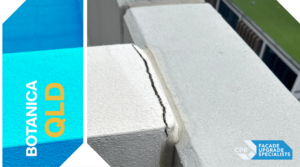
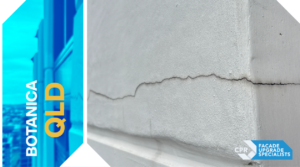
Hairline cracks might only require localised patching and recoating. But fixing hairline cracks in render without diagnosing the underlying cause can be a temporary fix.
Cracks may indicate:
- Movement joints failure
- Water ingress behind the render
- Corrosion in embedded reinforcement
- Substrate instability
A simple patch repair vs full re-render decision should never be made visually alone.
Our process identifies whether you’re dealing with superficial cracking or blown render repair scenarios requiring deeper intervention. Which means for you… no nasty surprises halfway through the project.
Blown Render Repair and Structural Risk
Blown render repair typically involves removing hollow or delaminated sections and reinstating the system.
Left untreated, blown render can:
- Allow water penetration
- Accelerate concrete spalling
- Create falling debris risks
For building managers, this is not just cosmetic. It’s liability.
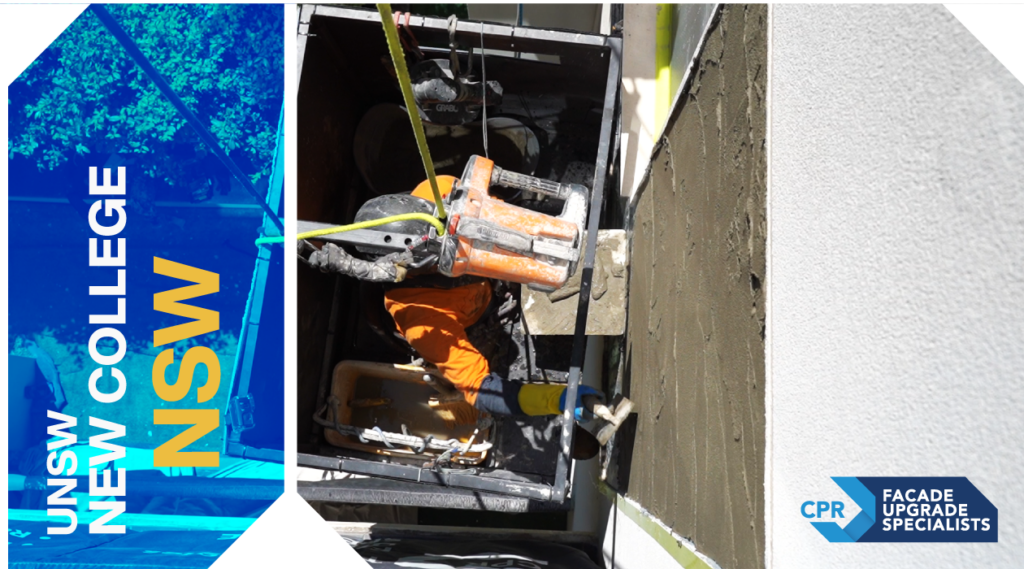
Our SkyPod® encapsulated workstations allow safe, controlled removal of defective render without debris falling to pedestrian areas below. Which means for you… improved safety, compliance, and minimal disruption to residents and businesses.
Monocouche Render Repair Cost and Specialised Finishes
Monocouche render repair cost can be higher than standard cement render due to colour matching and system compatibility.
Pebbledash removal cost also varies significantly depending on height and substrate condition.
In both cases, incorrect repair methods often result in visible patchiness — leading to repainting or premature re-rendering.
AIMMS™ ensures accurate defect quantification and staging before works begin. Which means for you… clarity on whether isolated repair is viable or whether a broader preservation strategy is more cost-effective long term.
Damp Proofing Render Cost and Water Ingress Issues
Damp proofing render cost increases when water ingress has already compromised substrate layers.
Repairing flaking render caused by trapped moisture without resolving the moisture source is ineffective.
For strata committees, water issues are often the real trigger for action — more urgent than aesthetics.
Our end-to-end facade remediation approach integrates:
- Concrete repairs and durability upgrades
- Waterproofing strategies
- Protective coating systems
You can explore how we address structural durability within our specialised concrete repair and facade preservation methodology through our concrete repairs and durability services for high-rise facades.
This integrated approach means for you… longer-lasting results and fewer repeat levies in five to seven years.
Scaffolding Costs for Rendering vs Scaffold-Free™ Access
Scaffolding costs for rendering can significantly inflate budgets on high-rise buildings.
Beyond cost, scaffolding introduces:
- Extended installation periods
- Noise and disruption
- Security risks
- Visual impact on the building
Our patented access technologies allow works to be completed externally, discreetly and efficiently. Projects that traditionally take six months may be completed in three.
Which means for you… faster completion, lower overheads, and less resident frustration.
Render Cleaning vs Painting Cost: When Is Repair Enough?
Render cleaning vs painting cost comparisons often overlook the condition of the substrate.
If render is structurally sound, cleaning and repainting may suffice. If cracking, flaking or delamination exists, superficial painting may hide problems rather than solve them.
This is why many strata committees first engage us for inspection.
Through AIMMS™, we create a traceable defect register and photographic record of every repair area. Which means for you… transparency that stands up in committee meetings and general meetings.
If you would like an expert opinion before committing to large capital works, you can request a facade remediation consultation with our specialists to assess your building’s true condition.
DIY Render Repair Kit: Is It Worth It?
DIY render repair kit solutions may suit small residential properties. They are rarely appropriate for multi-storey strata buildings.
Safety, compliance, and long-term durability cannot be compromised.
For volunteer strata committee members — often retirees managing million-dollar assets — the risk of under-specifying repairs can lead to greater financial burden later.
Is it worth repairing old render? Yes — if it is diagnosed correctly and executed with a long-term preservation mindset.
How Long Does Render Repair Take?
How long does render repair take?
Small patch repairs may be completed within days. Full facade remediation on high-rise buildings may take several months.
However, access methodology dramatically affects timelines.
By eliminating extensive scaffolding mobilisation, our Scaffold-Free™ systems reduce setup time and accelerate works.
Which means for you… predictable programmes and fewer prolonged disruptions.
The Bigger Question: What Is the True Cost of Inaction?
Sometimes the most expensive option is delay.
Hairline cracks can evolve into water ingress. Water ingress can lead to reinforcement corrosion. Corrosion leads to concrete spalling and structural risk.
Projects that might have cost modest sums early can escalate into multi-million dollar remediation programmes.
Our experience across 450+ major projects demonstrates that early intervention reduces lifecycle costs and extends facade longevity by multiple decades.
And because every project is documented through AIMMS™, you retain a permanent digital record — strengthening future asset management decisions.
Final Thoughts: Cost Certainty Over Guesswork
So, how much does render repair cost?
The better question is:
How much certainty do you want before committing to capital expenditure?
With CPR, you are not simply receiving a quote. You are receiving:
- Data-driven defect quantification
- Scaffold-Free™ cost efficiencies
- Transparent reporting
- Multi-decade solutions
- AfterCare™ support
Which means for you… peace of mind, financial prudence, and a facade that protects your building’s value for decades.
If you would like to understand your building’s real repair cost exposure before issues escalate, book a consultation with our facade remediation experts and experience how AIMMS™ reimagines facade remediation.