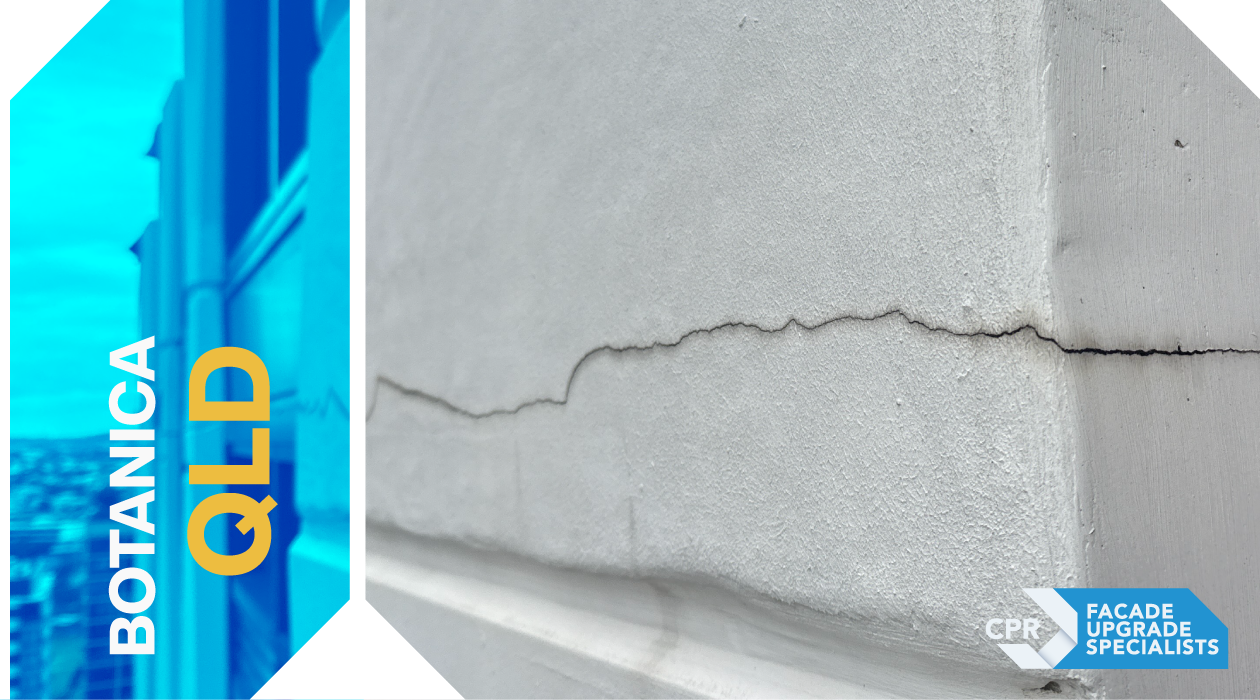
How to repair small cracks in render? It’s a question many strata committees and building managers ask the moment they notice hairline cracks spreading across a facade. And usually, it’s not just about appearance. It’s about what those cracks might mean for the building’s future — and the budget.
If you are responsible for a high-rise or difficult-access building, understanding how to repair small cracks in render properly can be the difference between a minor maintenance task and a major remediation project down the track.
At CPR Facade Upgrade Specialists, we see small cracks as early warning signs. Sometimes they are harmless surface shrinkage. Sometimes they are the first visible symptom of deeper facade movement, water ingress, or substrate failure. The key is diagnosing correctly — not guessing.
And that’s where our Scaffold-Free™ access systems and AIMMS™ methodology come in. AIMMS™ allows us to precisely quantify and map facade defects using data-driven inspections, which means for you… clarity before cost, transparency before commitment, and no financial surprises halfway through works.
What Are Hairline Cracks in Render?
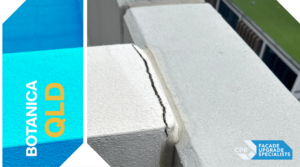
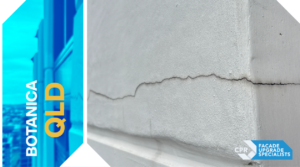
Hairline cracks in render are fine surface cracks that often appear as thin lines across a cracked render exterior wall. They are common in both new and ageing buildings.
Typical causes of cracks in render include:
- Natural building movement
- Thermal expansion and contraction
- Shrinkage during curing
- Poor substrate preparation
- Water penetration behind the render
For strata committees, the worry is understandable: does cracked render cause damp? In some cases, yes. While small cosmetic cracks may not immediately lead to moisture issues, open pathways in external render can allow water to enter over time — especially in coastal or high-wind environments.
Early identification is critical. Which means for you… small, manageable repairs instead of large-scale concrete remediation later.
Blown Render vs Cracked Render: Know the Difference
There’s an important distinction between blown render vs cracked render.
Cracked render usually refers to surface fissures.
Blown render refers to sections that have delaminated from the substrate and sound hollow when tapped.
Blown render is a structural concern. It may indicate water ingress, corrosion, or loss of adhesion.
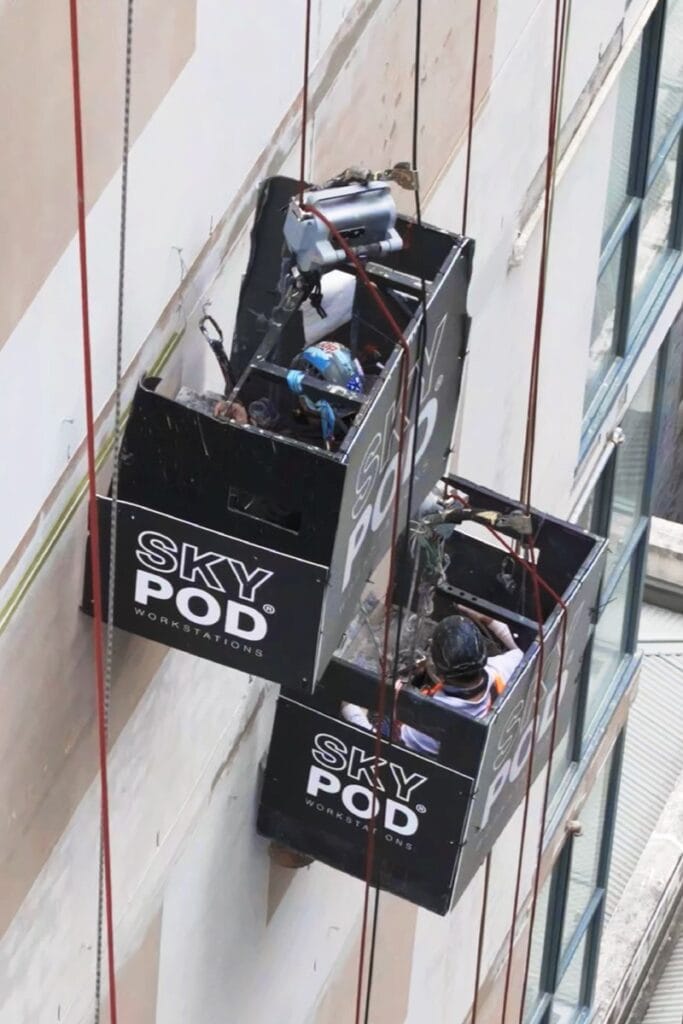
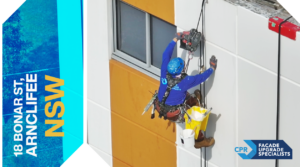
Through our Scaffold-Free™ MARS™, PEARS®, and SkyPod® systems, we inspect facades closely without intrusive scaffolding. Which means for you… minimal disruption to residents, faster access to every level, and cost savings that can reach up to 30% by reducing scaffolding overheads.
And because every defect is recorded and mapped through AIMMS™, you receive photographic evidence and quantified reporting — which means for you… confidence in committee meetings and defensible documentation for future asset planning.
How to Repair Render Cracks DIY – And When Not To
Many property owners search for how to repair render cracks DIY.
For small, low-rise residential areas, the general process may involve:
- Cleaning the crack thoroughly
- Widening slightly to allow filler penetration
- Applying a flexible filler for exterior cracks
- Smoothing and allowing to cure
- Painting over cracked render once dry
Products such as best exterior render filler or waterproof render sealant can temporarily address minor cosmetic cracking.
However, on multi-storey strata buildings, DIY repair is rarely appropriate.
Why?
Because the real issue is not just filling cracks in rendered walls. It is understanding why they appeared in the first place.
A crack caused by substrate movement, failing expansion joints, or water ingress will reappear if the underlying condition is not addressed.
Which means for you… patching without diagnosis can become a repeating expense rather than a solution.
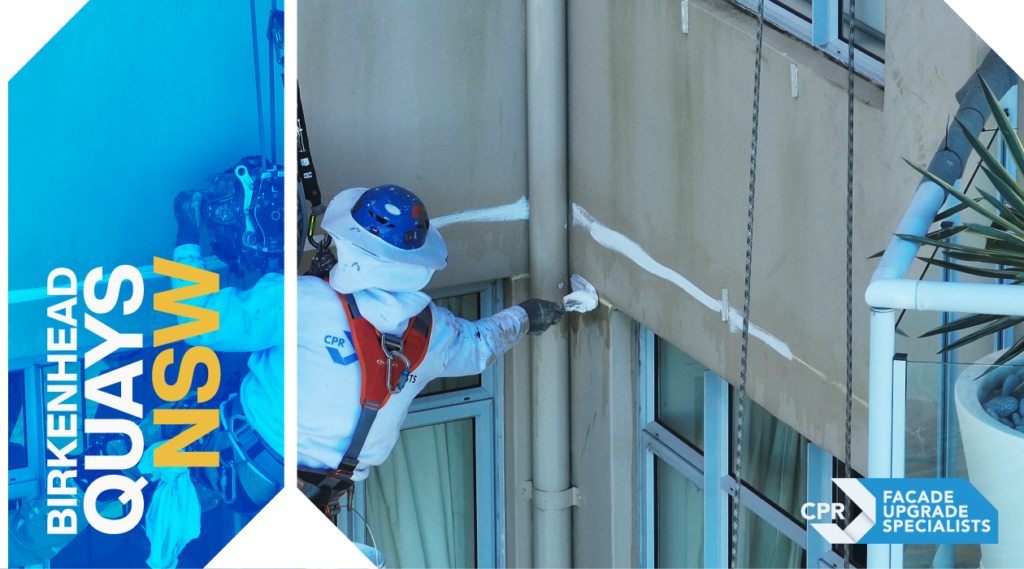
Professional Approach: Patching Rendered Walls the Right Way
When we approach patching rendered walls on high-rise facades, the process is methodical and data-driven.
First, AIMMS™ inspection maps the entire facade. Every crack is categorised by severity, length, and risk level. Which means for you… no over-scoping, no inflated quantities.
Second, we determine whether a sand and cement mix for render repair is suitable, or whether polymer-modified repair mortars and rendering mesh repair reinforcement are required.
In cases of recurring cracking, we may install mesh reinforcement to stabilise movement zones.
Which means for you… multi-decade performance instead of short-term patch jobs.
Fixing Cracks in Roughcast Render
Fixing cracks in roughcast render requires texture matching and careful blending.
Simply applying filler can leave visible patching, leading to aesthetic inconsistencies.
Our Accredited Service Partners™ are trained through rigorous internal standards to ensure texture continuity and colour blending. Combined with encapsulated SkyPod® workstations that control debris and dust, which means for you… safer worksites and higher-quality finishes without disturbing residents below.
Does Cracked Render Cause Damp?
One of the most common questions we hear is: does cracked render cause damp?
The honest answer: it can.
Small cracks may allow micro-penetration over time. Larger cracks or failed joints can accelerate moisture ingress, leading to:
- Flaking internal paint
- Concrete spalling
- Reinforcement corrosion
- Mould growth
This is why we treat cracked render as part of the broader building envelope system.
Our facade remediation methodology integrates concrete durability upgrades and protective coatings where required. You can explore how we approach structural durability through our detailed concrete repairs and facade durability services for high-rise buildings.
Which means for you… prevention rather than reaction.
Painting Over Cracked Render: Is It Enough?
Painting over cracked render may hide defects temporarily.
But paint is not structural reinforcement.
Without proper crack treatment, flexible filler application, and substrate preparation, cracks often telegraph back through coatings.
For strata committees already cautious about special levies, repainting without remediation can become a false economy.
Which means for you… apparent short-term savings that lead to repeat expenditure within a few years.
The CPR Difference: Data, Safety, and Cost Savings
Facade remediation has traditionally been expensive, slow, and disruptive.
Scaffolding alone can account for a substantial portion of project budgets.
Our Scaffold-Free™ methodology eliminates extensive scaffold erection in many cases. Combined with AIMMS™, which provides precise quantitative defect mapping, which means for you… up to 30% cost savings on overall projects, reduced timeframes, and greater transparency.
We have delivered over 450 major projects across Australia, backed by industry accreditations and award-winning outcomes. Our video testimonials from strata committees consistently highlight reduced timelines, minimal disruption, and clear reporting.
That is not marketing language. That is documented proof.
Peace of Mind for Strata Committees
If you sit on a strata committee, you are not just fixing cracks. You are protecting asset value for hundreds of owners.
The fear of raising levies unnecessarily is real.
The fear of choosing the wrong contractor is real.
The fear of being criticised for overspending is real.
AIMMS™ replaces uncertainty with documented evidence.
Which means for you… decisions based on data, not assumptions.
Confidence for Building Managers and Consultants
For building managers and consultants, the focus is efficiency, compliance, and defensible methodology.
AIMMS™ creates a permanent digital defect record.
Our Scaffold-Free™ access ensures safe, unobtrusive vertical mobility through MARS™, PEARS®, and SkyPod® systems.
Which means for you… traceable reporting, safer execution, and projects delivered on time.
Final Word: Small Cracks Today, Bigger Decisions Tomorrow
So, how to repair small cracks in render?
- Start with diagnosis.
- Understand the cause.
- Choose a methodology that delivers long-term performance.
If you would like to understand whether your cracked render exterior wall is cosmetic or structural, you can request a facade consultation with our remediation specialists or arrange an AIMMS™ demonstration.
Which means for you… certainty before cost, and peace of mind that your building is protected for decades — not just patched for now.