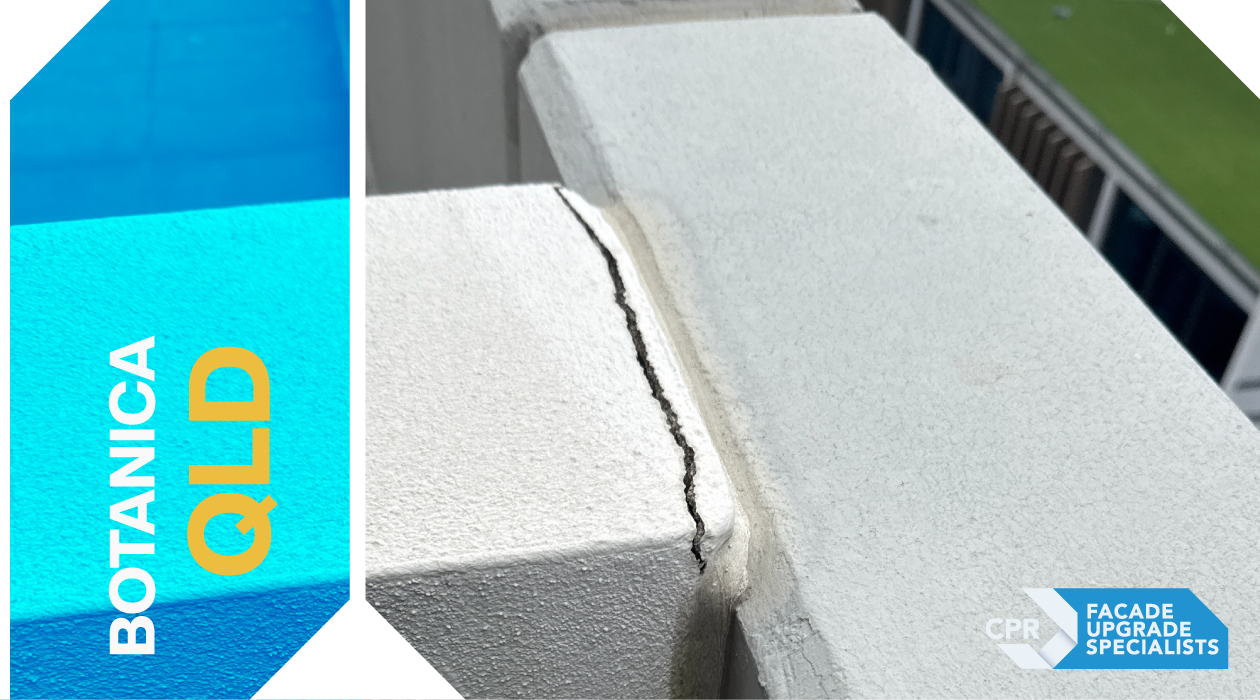
Are concrete cracks normal in high rise buildings? Imagine you’re walking the perimeter before a committee meeting and someone points up at a thin line running across the facade. It’s one of the most common – and most worrying – questions strata committees and building managers ask when they notice lines creeping across a facade, balcony soffit, or basement wall.
Picture this: you’re walking the perimeter before a committee meeting, and someone points up. “Has that crack always been there?” Suddenly the discussion shifts from routine maintenance to potential structural failure, special levies, and worst-case scenarios.
If you’ve recently spotted concrete cracks in high rise buildings under your care, you’re probably wondering: Is this harmless… or is this the start of something expensive?
Let’s unpack it properly – in plain language, but with the technical clarity you deserve.
The Short Answer: Yes, Some Concrete Cracks Are Normal
Concrete is incredibly strong. But it is not flexible. It shrinks, expands, moves, and reacts to its environment. Because of that, some cracking is expected over the life of a building.
Hairline cracks in new concrete are common during curing. These are often referred to as shrinkage cracks in concrete. They form as moisture evaporates and the material settles into place.
So yes – in many cases, concrete cracks are normal.
But the real question is not simply “are concrete cracks normal”. It is:
- What type of crack is it?
- Is it structural vs non-structural?
- Is it stable or progressing?
- Is water getting in?
That’s where clarity replaces anxiety.
Structural vs Non-Structural Cracks: Why the Difference Matters
This is where many committees move from reassurance to responsibility. Once you know some cracking is normal, the focus shifts to understanding risk – because the difference between a cosmetic line and a structural issue can mean the difference between minor maintenance and major remediation.
Now that we understand some cracking is expected, the next step is knowing which cracks are harmless and which require action.
Not all cracks are created equal.
Non-Structural Cracks
These are typically cosmetic or movement-related surface cracks. Examples include:
- Hairline cracks in new concrete
- Minor shrinkage cracks in concrete
- Surface crazing
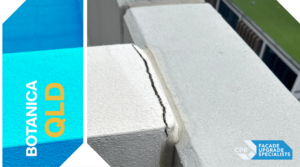
- Small expansion joint cracks
They may not immediately compromise structural integrity. However, if left untreated, they can allow water ingress – and water is what turns minor cracking into major repair works.
Structural Cracks
Structural cracks indicate deeper stress within the building’s load-bearing elements.
These may result from:
- Settlement cracks in high rise buildings
- Concrete fatigue in tall buildings
- Thermal cracking in concrete
- Excessive loading
- Reinforcement corrosion
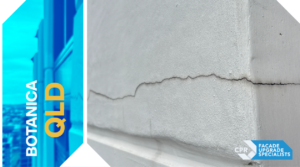
Structural cracks are often wider, diagonal, stepped, or located near columns, beams, and slab edges.
The acceptable crack width in concrete depends on exposure conditions and structural function. As a general guide, cracks wider than 0.3mm in exposed reinforced concrete should be investigated further.
If you are unsure whether cracks are structural vs non-structural cracks, the safest path is professional assessment – not guesswork.
Causes of Concrete Cracking in Tall Buildings
Understanding the causes of concrete cracking in tall buildings helps remove fear and replace it with practical decision-making.
Broadly, cracking tends to fall into two categories: movement-related and deterioration-related.
Movement-Related Causes
Shrinkage During Curing
As concrete cures, water evaporates and the material contracts. Without adequate control joints, shrinkage cracks in concrete can form.
Settlement Movement
Settlement cracks in high rise buildings occur when foundations or subsoils shift slightly. Even minor ground movement can create visible cracking at facade interfaces.
Thermal Movement
Thermal cracking in concrete happens because facades expand in summer heat and contract in cooler months. Over time, repeated expansion and contraction creates stress.
High-rise buildings are particularly exposed to solar load on upper levels, increasing thermal cycling and movement stress.
Expansion Joint Failure
Expansion joint cracks occur when joints deteriorate or lose flexibility. When joints fail, adjacent concrete absorbs movement stress instead.
Deterioration-Related Causes
Water Ingress and Reinforcement Corrosion
Water penetrating through small cracks can corrode steel reinforcement. As steel rusts, it expands – causing further cracking and eventually concrete spalling causes such as delamination or falling debris.
This is where dangerous cracks in concrete walls begin to develop, particularly in coastal or high-moisture environments.
When Are Concrete Cracks Dangerous?
Concrete cracks become dangerous when they:
- Continue widening over time
- Allow active water ingress
- Are associated with bulging or spalling
- Appear near structural load points
- Cause pieces of concrete to detach
In high rise environments, even minor facade defects can become serious safety hazards if falling debris occurs.
This is why high rise building maintenance must be proactive, not reactive.
Waiting until concrete spalling causes visible damage usually means higher costs, emergency make-safe works, and resident disruption.
The Hidden Cost of “Let’s Just Watch It”
For strata committees, the biggest fear is cost blowouts. Nobody wants to raise special levies unnecessarily.
But here’s the reality: small cracks are affordable to repair. Advanced deterioration is not.
Delaying assessment often results in:
- Larger remediation scopes
- Increased access costs
- Water damage to internal finishes
- Insurance complications
- Resident complaints
Peace of mind comes from knowing exactly what you’re dealing with – not hoping it will stay the same.
That’s why many committees begin with a structured facade assessment before committing to major works.
How CPR Assesses Concrete Cracks in High Rise Buildings
With more than three decades of facade remediation experience across Australia, hundreds of completed high-rise projects, and multiple industry awards recognising innovation and safety, CPR brings proven authority to every inspection. Our track record is not theoretical – it is built on measurable results, documented case studies, and long-term building performance.
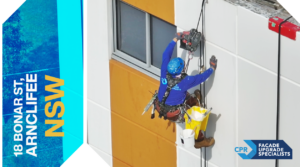
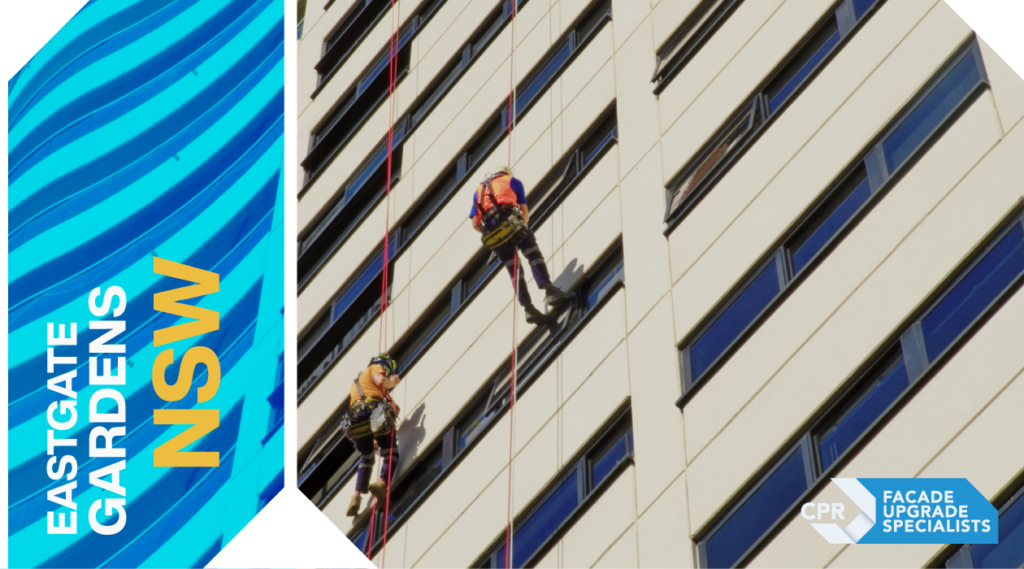
At CPR Facade Upgrade Specialists, we do not rely on visual assumptions from ground level. We combine over 30 years of remediation experience with proprietary Scaffold-Free™ technology to access and assess every part of your building envelope.
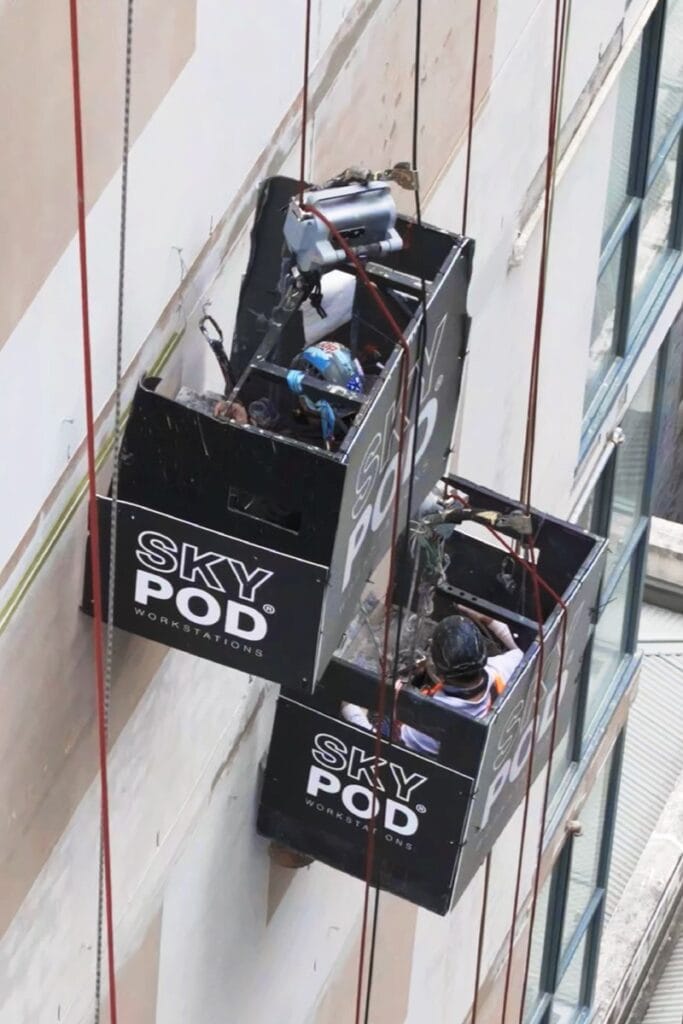
We use our Scaffold-Free™ access systems – MARS™, PEARS®, and the patented SkyPod® – to physically reach every facade element without traditional scaffolding.
Which means for you…
- No large scaffolding structures
- No months of visual obstruction
- Reduced project timelines
- Up to 30% cost savings compared to traditional access methods
More importantly, we diagnose defects using AIMMS™ – our integrated inspection, mapping, and project management system.
AIMMS™ documents every crack, maps its exact location, quantifies severity, and records before-and-after repairs in a structured, traceable format.
Which means for you…
- Transparent reporting
- Clear scope definition
- Reduced risk of scope creep
- Confidence in budgeting
- A permanent defect history for future committees
For building managers and consultants, this delivers defensible data, audit-ready documentation, and measurable quality assurance – not subjective visual opinions.
From Crack to Multi-Decade Solution
Repairing concrete cracks is not just about filling a line.
It requires understanding:
- Root cause
- Structural implications
- Moisture exposure
- Future movement risk
We design multi-decade solutions, not cosmetic patches.
Where necessary, repairs may involve:
- Crack injection
- Concrete patch restoration
- Protective coating systems
- Expansion joint upgrades
- Corrosion treatment
Because we operate via Scaffold-Free™ methodology, disruption is minimised.
Which means for you…
- Quieter works
- Less resident inconvenience
- Faster completion
- Maintained building reputation
Strata Committees: What Should You Do If You Notice Cracks?
- Do not panic.
- Do not ignore them.
- Avoid relying solely on informal opinions.
Instead, seek an evidence-based inspection.
If you are unsure whether the cracks in your building are structural vs non-structural cracks, consider booking a professional consultation with CPR’s facade remediation team.
Our concrete repair and durability specialists can provide clarity, scope definition, and long-term recommendations tailored to your building – so decisions are based on facts, not fear.
Building Managers & Consultants: Managing Risk with Data
For professionals responsible for compliance, safety, and risk mitigation, visible cracking presents exposure.
AIMMS™ provides quantifiable defect mapping, lifecycle insight, and traceable reporting.
Which means for you…
- Reduced liability exposure
- Clear remediation staging
- Budget forecasting accuracy
- Data-driven maintenance planning
If you would like a technical walkthrough of how AIMMS™ supports high rise building maintenance strategies, you can request a professional briefing with our team.
The Real Question Isn’t Whether Cracks Are Normal
Yes – some cracking is part of a building’s natural movement.
But normal does not mean harmless.
In high rise buildings, movement is expected. What matters is how it’s monitored, managed, and preserved.
With the right inspection, the right access methodology, and the right long-term strategy, concrete cracks in high rise buildings can be addressed efficiently, affordably, and transparently.
If your building has visible cracking and you want certainty rather than assumptions, speak with CPR about a facade assessment or request an AIMMS™ demonstration.
Clarity today prevents cost escalation tomorrow.